
MSI specialists for deafblind children and young people
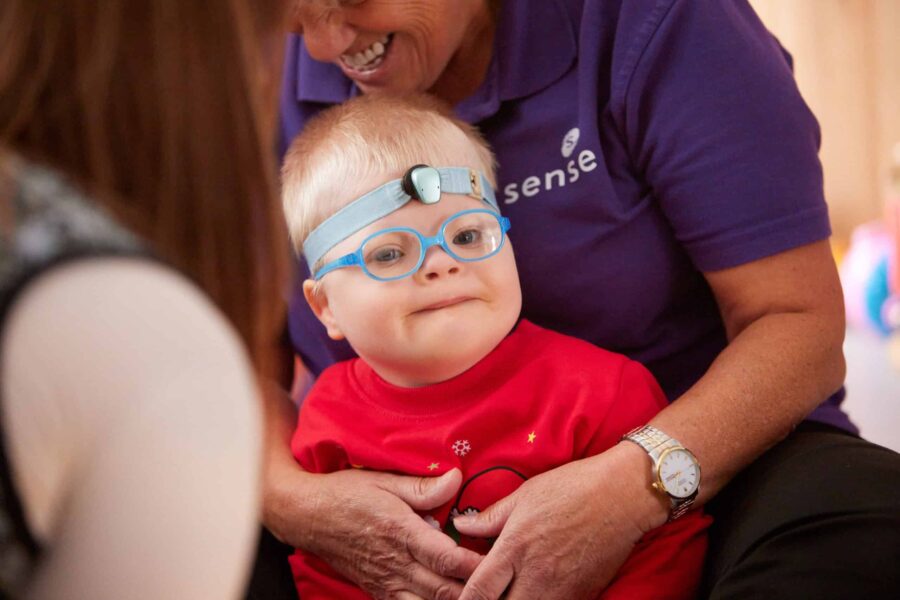
Our MSI service for children and young people provides personalised, tailored and flexible support to people with multi-sensory impairments.
We always find a way to support play, interaction, communication, access to information, and independence.
Our team work in collaboration with professionals to provide the best outcomes for children and their families, and we support families to navigate the education, health and social care systems.
Where are we based?
We are a national team supporting children, young people and their families across England and Wales. We have centres in Barnet, Birmingham, Bristol, Caerphilly, Leeds, and Loughborough.
We visit young people at home, in their education setting, in hospital, and in the community across England and Wales, and we host groups and events in venues across the country too.
We also offer a digital service that can be accessed at home. Complete an application form to find out more about how we can support you.
Get in touch
This service is for children and young people with a combination of vision and hearing impairments, or a vision or hearing impairment combined with an additional need.
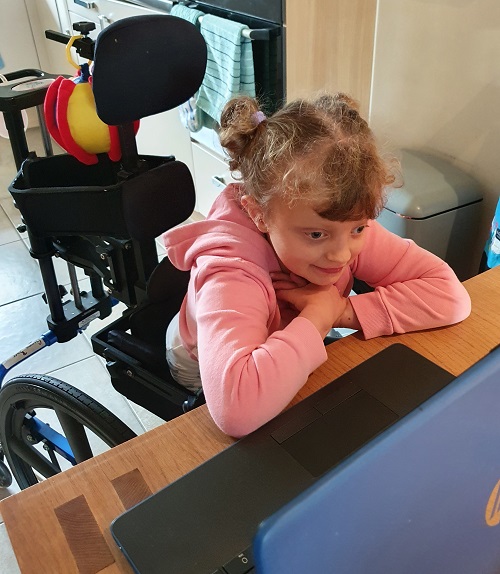
“It’s been amazing to work with the Sense team to develop Tilly’s communication. Before, she couldn’t communicate with us, but Sense is supporting Tilly to learn to sign.”
Louise, Tilly’s mum
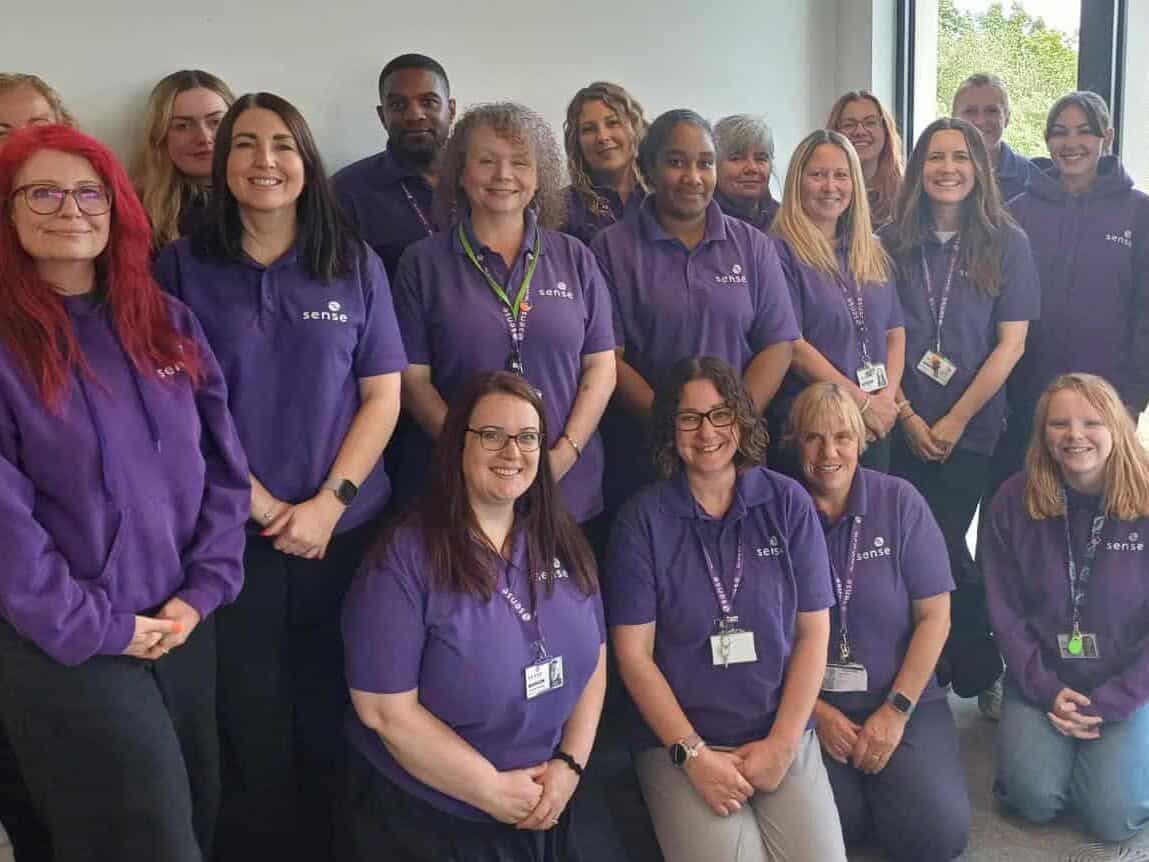
Meet the team
Our expert team has years of experience in helping disabled children with complex needs, including deafblindness, to learn, develop and communicate.
What is a multi-sensory impairment?
Multi-sensory impairment (MSI) is a term often used alongside or instead of deafblindness. Deafblindness means you have sight and hearing loss that affects your everyday life. Being deafblind doesn’t necessarily mean you are totally deaf and/or totally blind. Some people may also use the term dual-sensory impairment.
Our specialist support

- Individualised advice regarding:
- Play, interaction and social skills
- Exploration, orientation and mobility
- Communication
- Access to information
- Blocks of individual sessions at home or nursery/school/college which are outcome focussed, linked to the individual’s MSI needs.
- Access to 1:1 virtual support when face to face support is not possible due to distance and health constraints.
- Support with the Education, Health & Care Plan process and to access appropriate specialist assessments (e.g. social care).
- Joint working with other professionals to support the child in all areas of their development.

“Now, I feel very confident. We don’t see Verity’s disability as a barrier anymore. Sense has helped us smash through that.”
Sarah, Verity’s mum
Other services for disabled children
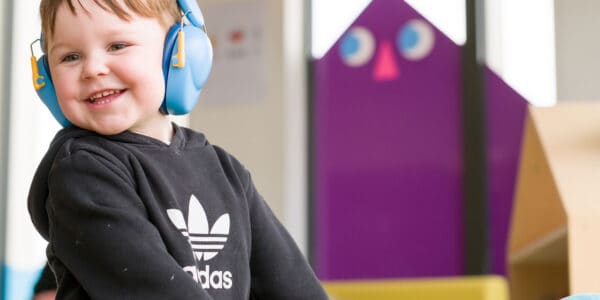
Early intervention for disabled children

Online sessions for families of disabled children

Sense College

Activities for disabled people

For parents

Other sources of support for your child
Support from Sense
Sense is here to support disabled people with complex needs to feel connected and included. From the first weeks of life and through the major milestones of adulthood, we want to ensure disabled people and their families are supported to live fully at every stage of life. If you need more information and advice about the services we provide, you can find out more here.