
Our inclusive Easter activities guide for disabled children with complex needs

One of my favourite things about working as a play leader for Sense is our sensory play activities.
Sensory play is a fun, uplifting (and occasionally messy!) way of supporting your child’s development. We do this by enhancing the sensory aspects of play to make it more accessible and help your child to explore and engage with the world around them.
Whether your child is into arts and crafts, baking, Easter egg hunting or just outright messy play, we have something for everyone. Here are some of our favourite Easter-themed sensory play ideas for you to bring to life at home:
Easter-themed sensory tray
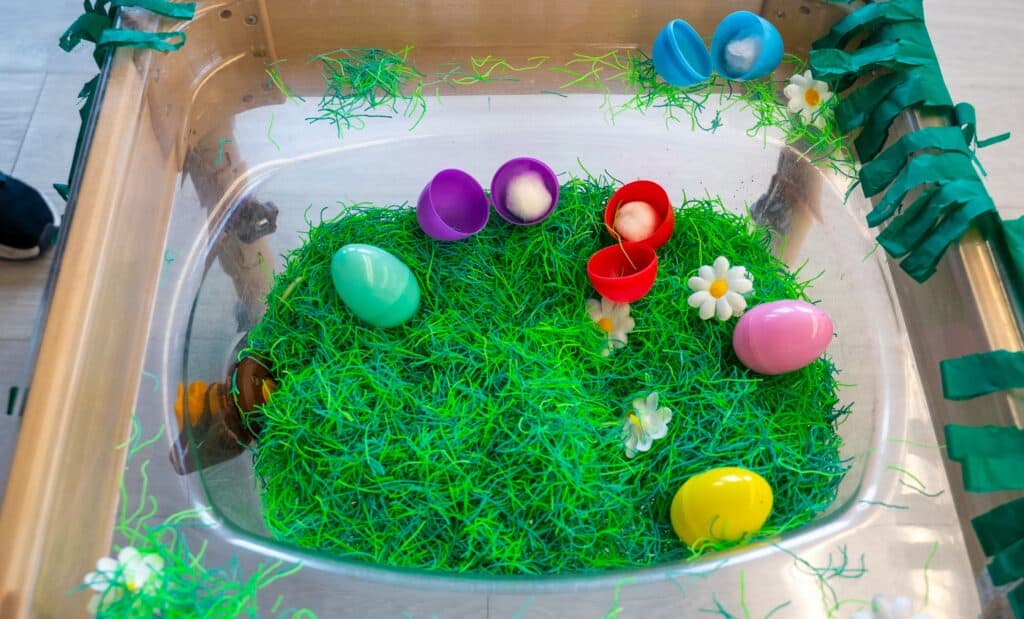
A sensory tray is a great place to start to help build your child’s understanding of Easter. It allows your child to explore Easter-themed items through sensory play using touch, sight, sound, smell and taste, in a safe and supportive environment.
Sensory Tray example
The photo below is a great example of how to build a sensory tray. Top tip: You really want to focus on letting the child explore the items themselves, ensuring there are lots of fun sensory elements.
Health and safety: Please be aware of any potential allergic reactions or medical reasons which mean certain scents should not be used. If in doubt, ask for advice.
Instructions
- Fill a tray or Easter basket with tactile materials (think of things like sand, shredded paper, furry objects) and eggs that can be filled.
- Each egg could contain a different sensory element, such as cotton balls of different scents, like lavender, citrus, vanilla and peppermint.
- Hide eggs within reach, rather than around a room, remove any barriers and allow the child to explore.
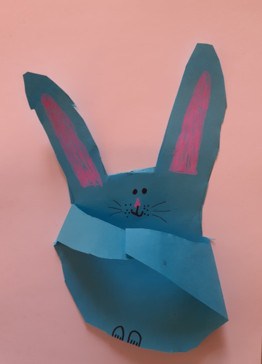
Handprint Bunny
Handprint Bunny example
Top tip: Larger hands are easiest to use! Step 3 can be tricky.
Health & Safety: Make sure a responsible adult is handling the scissors.
Instructions
- Draw around a hand, making an outline.
- Cut out the hand, around the outline, making sure you have a V-shape between the fingers.
- Cut a small slit beside the little finger. Then fold the little finger towards the centre, making one of the bunny arms.
- Fold the thumb towards the centre for the other bunny arm.
- Cut off the middle finger, leaving you with two finger “bunny ears”.
- Now for the fun, get decorating! The rabbit will need a face (whiskers, nose, eyes, ears, mouth), paws and feet!
Chocolate is not just for eggs!
Easter Baking
Top tip: Enjoy the process. Part of the fun is experimenting with ingredients and making a mess, so focus on enjoying the activity together – not just the finished treat.
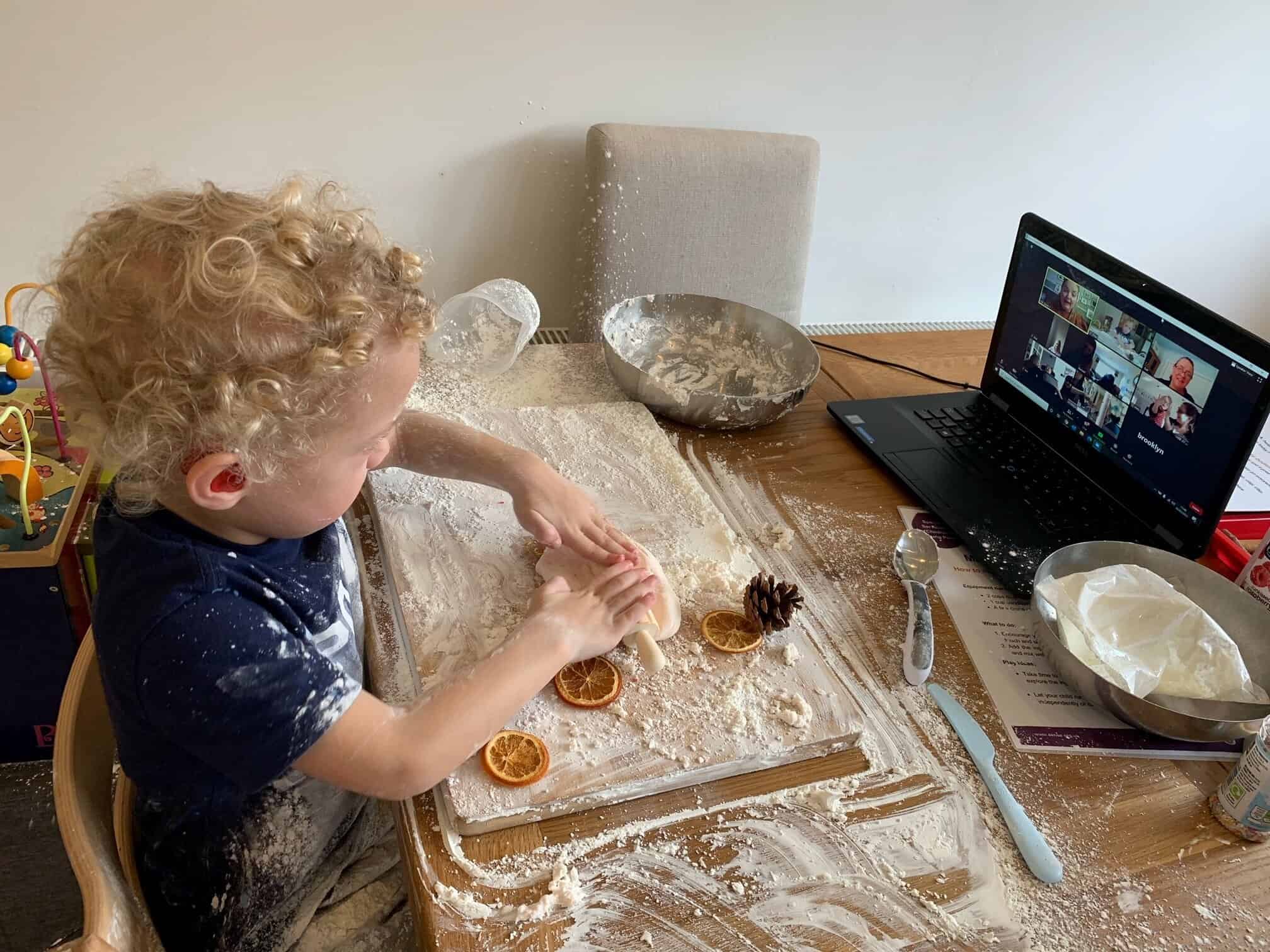
Health & Safety: Melted chocolate can be very hot, so please be careful and ask an adult for help.
Instructions
- Melt your chocolate. Break your Easter treats into pieces and place them in a microwave-safe bowl. Heat in the microwave in 20-second intervals, stirring in between, until the chocolate is fully melted.
- Add your favourite treats. Mix in ingredients such as cereal, marshmallows, crushed biscuits, or sweets to create different textures.
- Shape your creations. Spoon the mixture into cupcake cases or spread it into a lined tray.
- Chill to set. Place the tray or cases in the fridge until the chocolate has set.
Tactile Egg Hunt
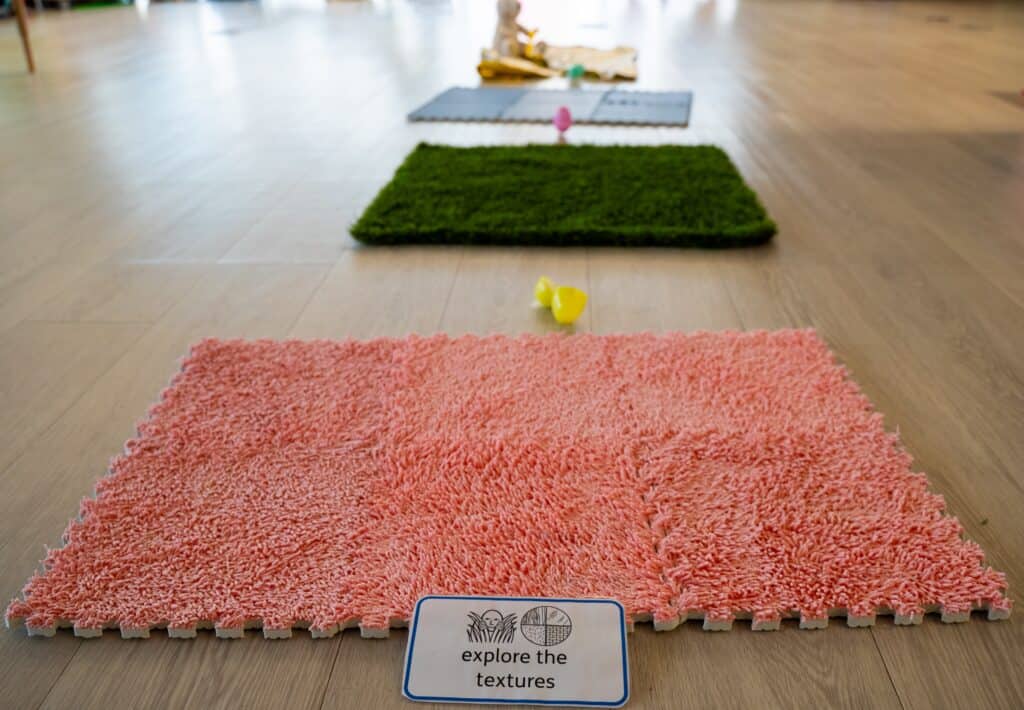
It’s not Easter without an egg hunt! By creating a tactile path, as shown in the example below, you can remove barriers, allowing the child to navigate the trail in a way that feels natural to them.
This approach provides a clear and safe route to follow, helping them build confidence as they independently discover each egg along the way.
Example of a tactile path
Instructions
- Create a tactile trail leading to the eggs so your child can follow the path through touch, using their hands or feet to move from one point to the next.
- Top tip: You could use different textures along the route, such as soft fabric, bubble wrap, grass mats or foam shapes, to make the journey engaging.
Even more Easter Sensology
If you’ve never heard of Sensology before, don’t worry. We use this term a lot – it simply means a sensory-based approach that stimulates different senses to help children explore, learn and engage with the world around them.

Go on a Sensory Walk

Create a Resonance Board

Read a Sensory Story
Thank you for reading! I hope you have learnt lots of fantastic ideas for activities to enjoy with your child this Easter.