
Top tips for an inclusive Easter egg hunt

When you think about Easter, what’s the first thing you think of? I bet the first thing that came to your mind was an Easter egg hunt!
They were always my favourite part, and not just because of the chocolate reward at the end, but because of the excitement along the way.
Now, picture the Easter egg hunt again. But this time, think about how it’s set up – would everyone be able to take part and enjoy it in the same way?
For disabled people with complex needs, it’s often not the activity itself that’s the challenge, but the barriers around it. Things like hard-to-reach hiding spots, overwhelming noise, unclear instructions or lack of alternative ways to take part can all make the experience less accessible.
When these barriers exist, they can stop people from taking part in the fun of Easter. The good news is that with a few thoughtful changes, Easter egg hunts can be made accessible and enjoyable for everyone
Here are my top tips for an inclusive Easter egg hunt:
1. Location accessibility
Choosing an accessible location and route is essential to creating an Easter egg hunt that is inclusive and enjoyable.
I always recommend doing the planning first! You should map the space beforehand, looking for and avoiding any uneven or inaccessible areas, such as ditches or holes. I would then create simple tactile maps that can support people to understand the location and layout, giving them greater independence as they explore.
A flat, firm and accessible space with clear pathways – such as paved routes or defined trails – helps people move around with confidence and ease.
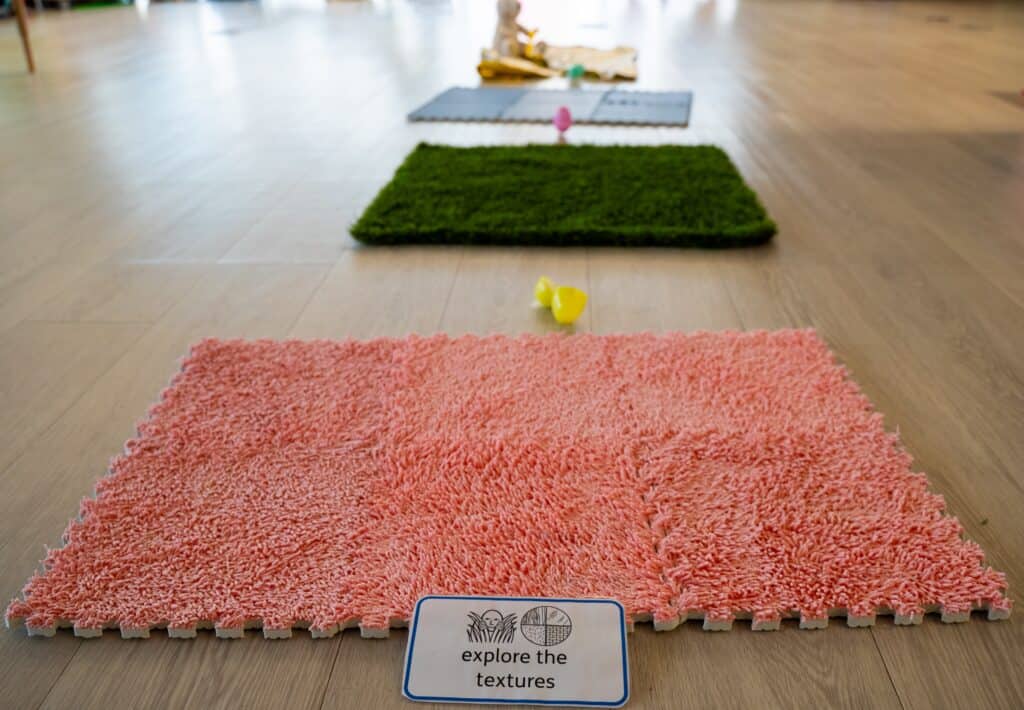
Descriptive transcript of our Texture trail egg hunt video
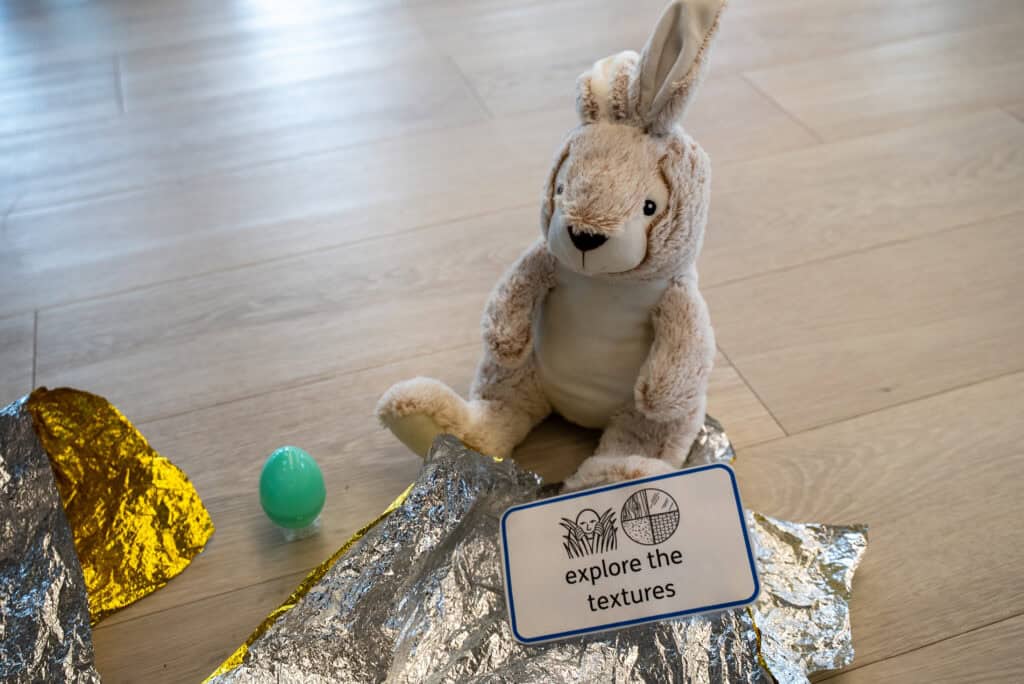
A room is set up with 4 different sensory tiles on the floor. They are made of artificial grass, soft carpet, foam padding and tin foil. Between each tile is a plastic egg that can be opened.
Jen: This is our sensory egg trail, where our children and young people move throughout the different sensory experiences to find their eggs.
Jen opens one of the plastic eggs and shows that it had a cotton wool ball inside.
Jen: In the egg, there is a little cotton wool piece that has been sensory scented as well with different scents such as vanilla and lavender. And the children can use their senses to open the egg, to smell.
Jen smells the cotton wool ball, then places it back inside the plastic egg. She then walks over the different tiles towards the end of the room.
Jen: As the children move through their different sensory floor tiles using their hands and feet and pick up their eggs. They then end up at our bunny at the end.
Jen pats a soft toy rabbit that is placed at the end of the trail.
The Sense logo appears.
If you are inside, adding tactile elements, like squares made from artificial grass or hanging bunting at waist height, can help guide people through the space in an engaging way.
It’s also important to include rest points or quiet zones along the route, with options like bean bags or benches, so everyone can take a break when needed.

2. Egg placement
Making sure eggs are placed thoughtfully is really important.
Position your eggs in a variety of locations, think about places that are close to pathways, on the ground or in raised areas, so people can find them in ways that suit their needs.
Placing eggs at waist or eye level ensures they are accessible for wheelchair users and those with limited mobility. For those who would rather explore than hunt, you could create Easter-themed stations with sensory trays, offering a more structured and interactive way to explore.
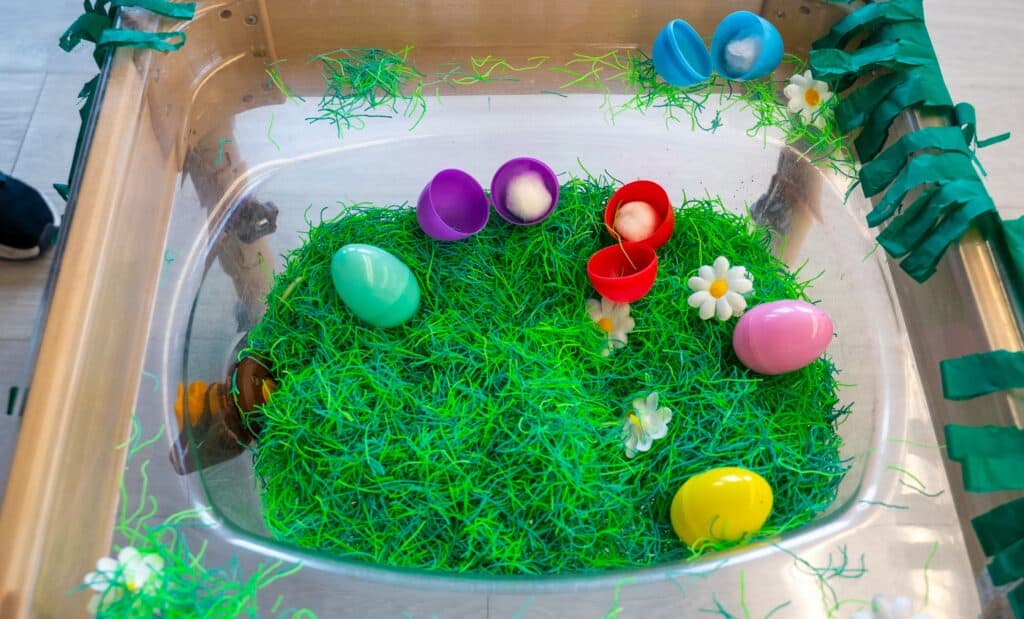
If you want to add to the experience, you could add other visual and playful elements to make the experience even more engaging. For example, you could attach the eggs to balloons, making them float, while staying within reach.
3. Equipment
Before I lead an inclusive Easter egg hunt, I would try to provide people with picture symbols of eggs to help them understand what they are looking for, supporting their communication and independence throughout the activity.
Brightly colored or high-contrast eggs are another great way to help the eggs be spot easily. Incorporating tactile eggs with different textures, adds a sensory element that keeps the activity exciting and inclusive. You can find eggs with bells inside, eggs you can fill with scented cotton balls and even vibrating eggs!
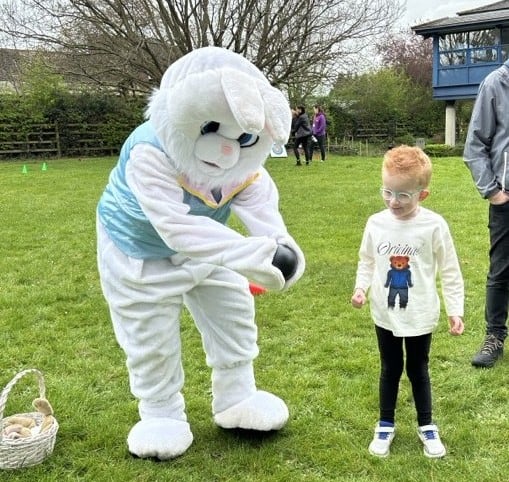
But please don’t feel limited to traditional eggs! You could use small toys, stickers, or other sensory items as alternatives, such as light-up or beeping eggs, giving people more variety. For those who may struggle to reach lower areas, using scoops or grabbers makes collecting eggs easier and more accessible.
Wearable pouches or bags are also useful for allowing people to store eggs safely while keeping their hands free – perfect for those using crutches or for those who need both hands free to fully explore!
4. Other considerations
When planning a sensory-focused Easter egg hunt, spacing out the sensory elements is key. Too many sights, sounds, or textures in one area can become overwhelming, so I would recommend spreading them throughout the route to help people enjoy the experience at their own pace.
Background music can add a fun atmosphere, but be conscious of the volume. You do not want it to interfere with the persons’ ability to hear instructions or communicate.
Pairing people with volunteers or older children can also provide additional support, guidance, and confidence during the hunt. It is also a great way to meet new people and make friends!
And, as always, safety is essential – clearly label any food-based items with allergens to ensure everyone can enjoy the activity safely. Do not handle sharp objects without a responsible guardian nearby, and avoid using items that could be choking hazards.
Thank you!
As our Sensory Walks Lead, I’m always looking for ways to make seasonal activities more inclusive. Easter is a perfect opportunity to combine relaxed, sensory walks with a fun and engaging Easter egg hunt.
So this Easter, take some time to get outside – enjoy the sun on your face, listen out for birds, and take in the sights and sounds of spring… with a chocolate reward waiting at the end!
I hope you have an amazing and egg-ccessible Easter!