
“People assume I’m not capable of being a mum because I use a wheelchair and have cerebral palsy – they’re wrong!”
Steph lives in Coventry with her husband Richard and their children Libby and Bertie. Steph is a wheelchair user and has cerebral palsy and, in many ways, challenges misconceptions about what it means to be a mum.
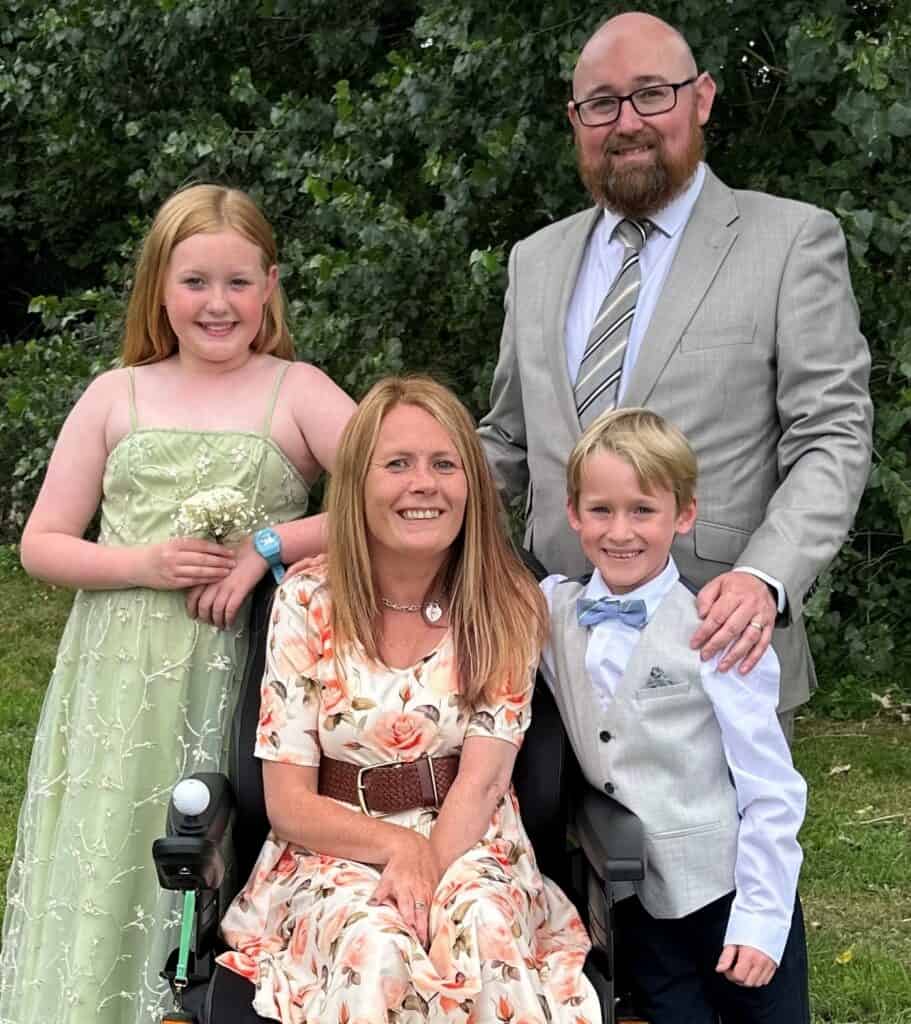
Steph always wanted to be a mother, but faced opposition, including from medical professionals, who doubted whether someone who uses a wheelchair and needs support with eating could cope with pregnancy or parenting.
Determined, Steph had already become one of the UK’s first physically disabled people to graduate from university with a degree in dance, later working as a dancer and choreographer. Today, she works closely with our Arts and Wellbeing team as an expert in their Advisory Arts Group, supported by Arts Council England.
Through this role, she helps shape the inclusive arts programmes across Sense and supports disabled people to express themselves through art, music and dance – drawing on her own lived experience to challenge barriers and expand what’s possible.
Now, Steph and Richard want to share their story to challenge assumptions that disabled people can’t be parents.
Becoming a mother
A lot of people assume I’m not capable of being a mum, or they try to help me or take over.
Before I got pregnant, I went to see a doctor to get medical advice about how my body would cope, but all she said was, ‘How will you look after the baby?’…
Then, when I was 35 weeks pregnant with Libby and in hospital with horrific morning sickness, a member of staff called in the Referrals and Assessment Unit – which is what they do if they think you’re not capable of looking after the baby.
No one raised any concerns with us before Richard got a call saying we’d been referred, but luckily, it was quickly dropped. But you can imagine the worry this caused.
Both of my pregnancies were difficult due to hyperemesis gravidarum, causing severe sickness, and I had to have two caesareans. But once my babies were home, I found my own ways to parent with a carer’s support.
Having cerebral palsy affects my movement and coordination, so a special carrier helped me lift Libby safely; I also put handles on a baby bottle so I could feed her myself. By three months, Libby was sleeping through the night and by the time Bertie arrived two years later, I was a pro.
Fighting assumptions
When Bertie was a baby, one carer constantly tried to pick him up when he was crying, even though that was my job. I was making my way towards him when she pushed past me to snatch him first.
Even now, when I’m outside with the kids, we have to deal with people staring and people’s attitudes. They’re wondering, ‘How is she a mum?’ My husband always surprises people, too. I think they automatically assume Richard has a disability, and then they ask, ‘Why are they together?’
I initially planned to adopt children, but that was until I met Richard on a pub night out 15 years ago! Then we decided to have them ourselves.
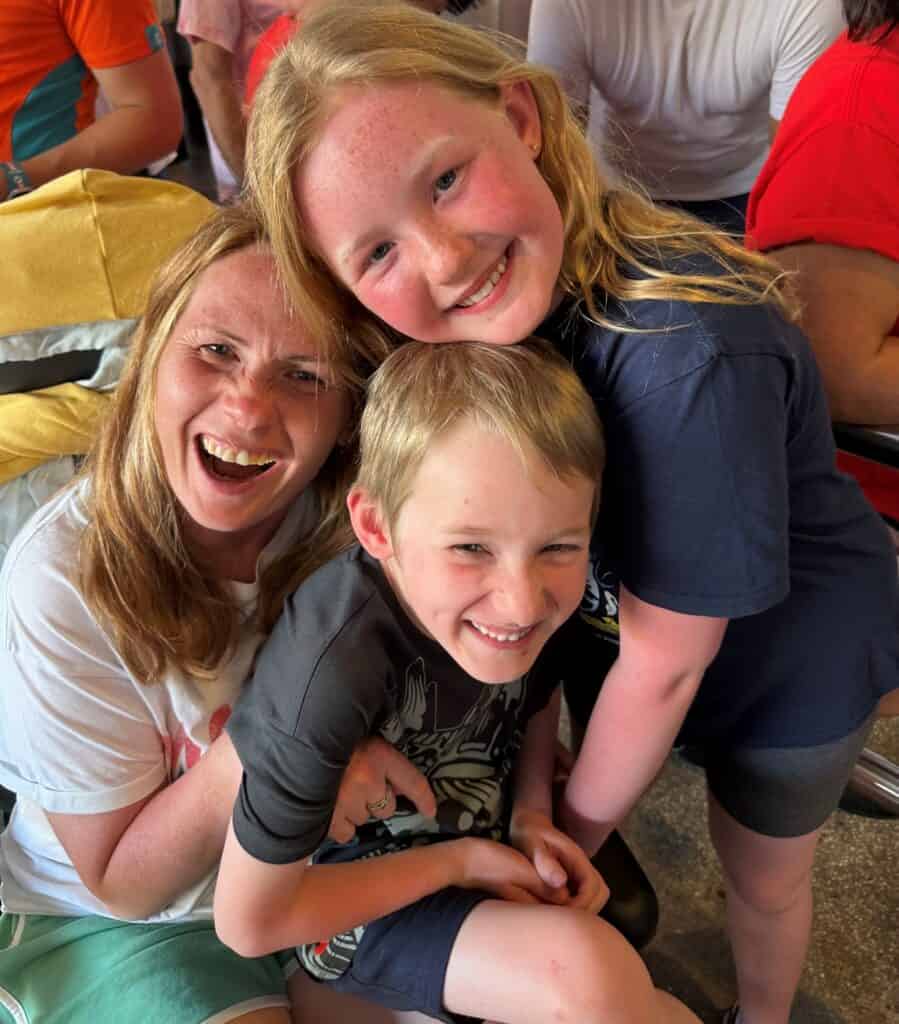
And I learnt what I already knew, I am capable of looking after my kids. I love having children, and I’ve always found ways to do things.
As well as finding a baby carrier and bottle handles for Libby, I managed to feed her when she first moved onto solids – we were both covered in food, but it worked!
Disabled parents are not considered
It hasn’t always been easy. I couldn’t take the children out myself until they were seven or eight, and making friends with other parents was hard – that only really happened after Bertie started school.
As the children have grown, there have been tough moments too. At a primary school careers day, the first groups of children who were supposed to ask parents about their jobs ignored me, and Libby, who was about nine, cried. I think that was the first time that her mum being disabled really affected her, and it hit her how people are about me.
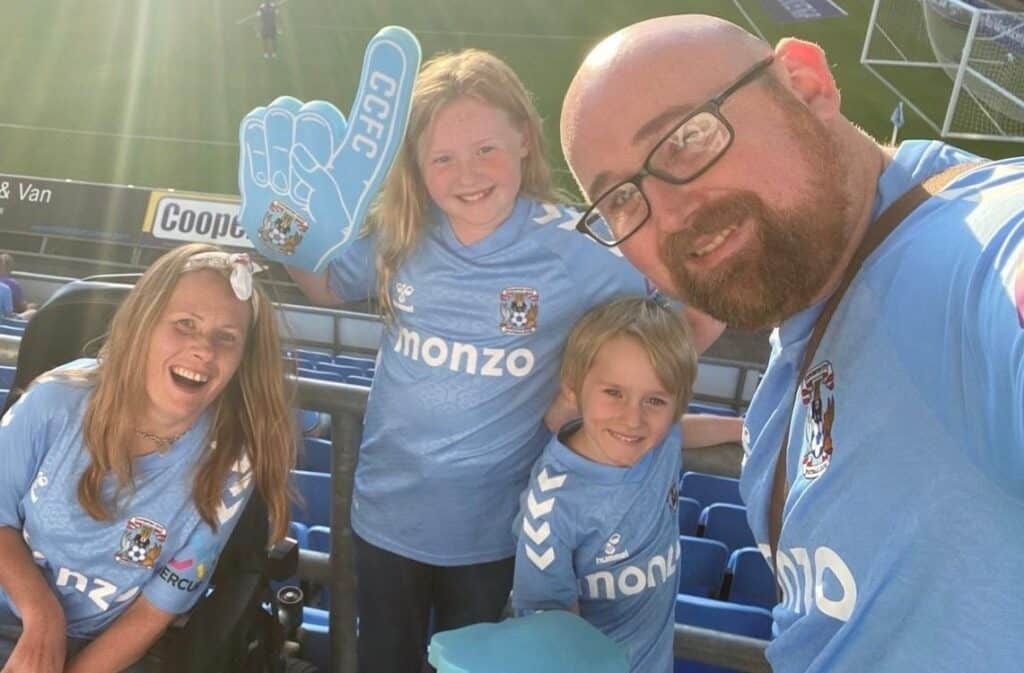
When Bertie wanted to go to his first Coventry City football match, it was hard for us to arrange to sit together in the stadium because children aren’t usually expected to sit next to wheelchair users. It’s just another example of how disabled parents are not considered when it comes to families – and we should be.
Mother Like No Other
I recently choreographed a dance about motherhood, which I call ‘Mother Like No Other’, which premiered at Sense’s hub, Sense TouchBase Pears, in Birmingham, with Libby and Bertie proudly watching and joining me on stage.
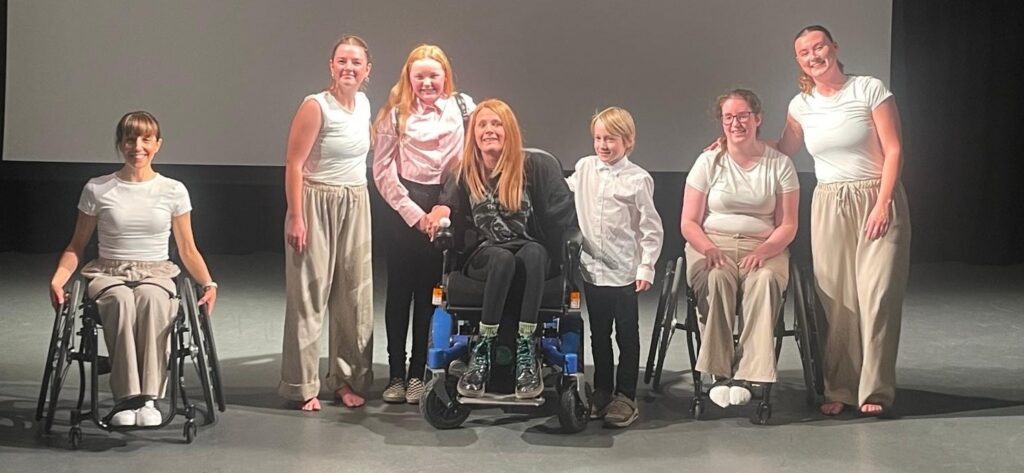
The piece reflects my personal journey and the mission of Sense’s Arts and Wellbeing team – to platform disabled voices, challenge perceptions and create opportunities for people to tell their own stories through the arts.
In one scene, two wheelchair dancers are trying to care for the baby – then two non-disabled dancers swoop in, snatch the baby and take over. This represents what you read earlier, about my own lived experiences as a disabled parent.
In another, it gets very frantic with dancers, both on stage and in a film behind it, representing the emotions, sadness, not being able to cope, anger, frustration, love, caring and nurturing all at once, before they all collapse.
That really does sum up what it’s often like to be a disabled mum!