
How to make your hiring process accessible to disabled jobseekers

As the national employment lead at Sense, my job is all about advocating for disabled people who are looking for jobs.
Every time I tell someone what I do, they have a story about themselves or someone they know who has struggled to find employment as a disabled person.
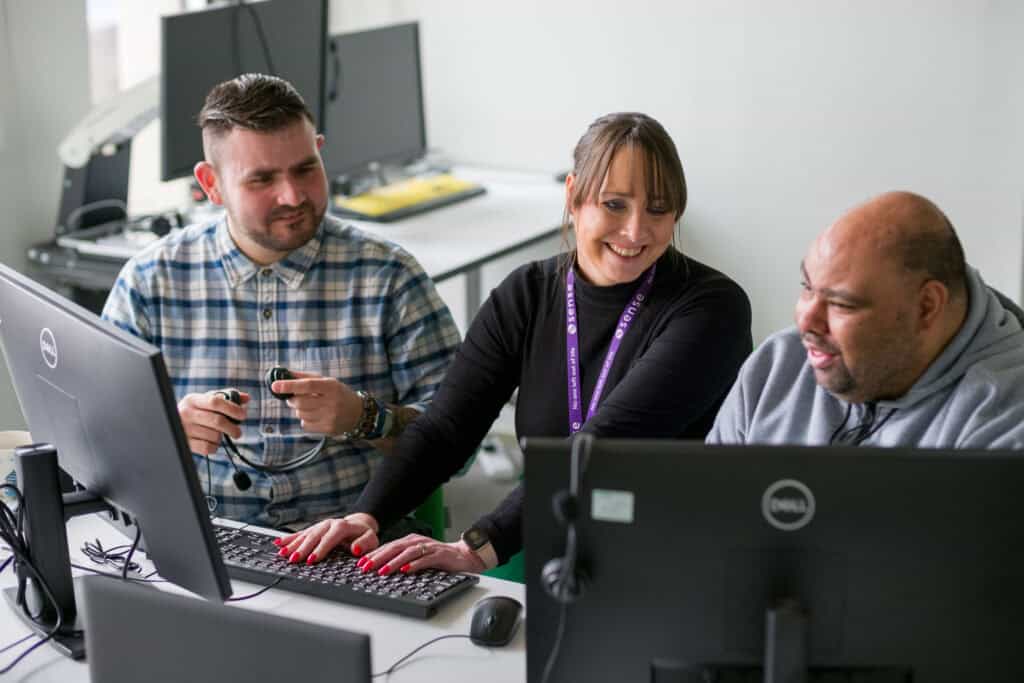
It’s so unfair and heartbreaking to hear. Just because somebody’s got a disability doesn’t mean they’re not good enough for a job.
That’s why disability inclusive hiring practices are so important.
These are my top eight tips for hiring managers, to make sure they’re giving the best shot to disabled candidates.
1. Offer pre-application support
Before they’ve filled out the application, candidates may have questions or concerns. Make sure they can get in touch to find out more if they need to.
It’s best to have a point of contact listed clearly on the job advert.
That person should be prepared to speak to disabled candidates and tell them about the support on offer in the hiring process and in the role.
2. Make sure your job description is crystal clear
Make sure your job description is written in plain English, with no jargon or buzzwords.
It should clearly lay out what the essential criteria for the job are, and what is expected of the person in the role.
3. Use inclusive imagery and case studies in your advertising
It’s important to give the message that you’re an inclusive employer who’s open to hearing from disabled candidates.
This might encourage people not to rule themselves out before they’ve started.
A good way of doing this is to use quotes and images that reflect your diverse workplace.
4. Offer multiple ways for people to apply
“If you want to attract the best candidates, you might consider allowing applicants to submit their applications online, by email, by post or even in a video.”
Accessibility is all about having options, because different things work for different people.
If you want to attract the best candidates, you might consider allowing applicants to submit their applications online, by email, by post or even in a video.
Remember to make sure your application form is mobile-friendly, too, as many people rely on their phones or tablets.
5. Be Disability Confident, and have an accessibility statement
It’s a good idea to join the Disability Confident scheme, and to advertise this clearly as part of your hunt for the right candidate.
This scheme means that you’ll offer an interview to any disabled candidate who meets the minimum criteria for the role. Find out more about the Disability Confident scheme.
You should also include an accessibility statement on the advert.
This lets applicants know what steps you’ve taken to make your workplace accessible, and what reasonable adjustments you may be able to offer them.
6. Offer reasonable adjustments for interviews
So your disabled applicant has been offered an interview – great!
Now it’s important to consider how you can make sure their interview is the best environment for them to thrive.
Types of reasonable adjustment you might offer include:
- Extended time for any tests or for the interview itself.
- Questions provided in advance.
- A buddy or guide to support someone before/during/after their interview.
- British Sign Language interpreters.
Remember that interviews are also a chance for the interviewees to get to know the company, and see if it’s the right fit.
You should come prepared to explain how well-supported they’ll be as part of your organisation. They may want to discuss what reasonable adjustments can be offered in the role.
7. Hold your interviews in an accessible location
Your office or workplace in general should be accessible.
“The best way to find out if your hiring practices are accessible is to ask the candidates themselves.”
But wherever you’re holding interviews, make sure that the space itself is accessible for disabled interviewees.
For example, is there a ramp for wheelchair users? Is there a hearing loop for D/deaf applicants who need them?
For some candidates, online interviews may be much more accessible.
8. Gather feedback and always keep improving
The best way to find out if your hiring practices are accessible is to ask the candidates themselves.
It’s best for it to come from the horse’s mouth – how did they actually feel?
A short survey at the end of the application process is a good way to find out how easy and user-friendly it was. Then, you can keep on making improvements for next time.
Get employment support from Sense
Are you disabled and need support with talking to your employer, or looking for jobs?