
How to communicate with someone who is deafblind

When people hear the term “deafblind” they often think that it means someone who is totally deaf and totally blind. In fact, this is far from the case. People who are deafblind may have some hearing and/or some sight.
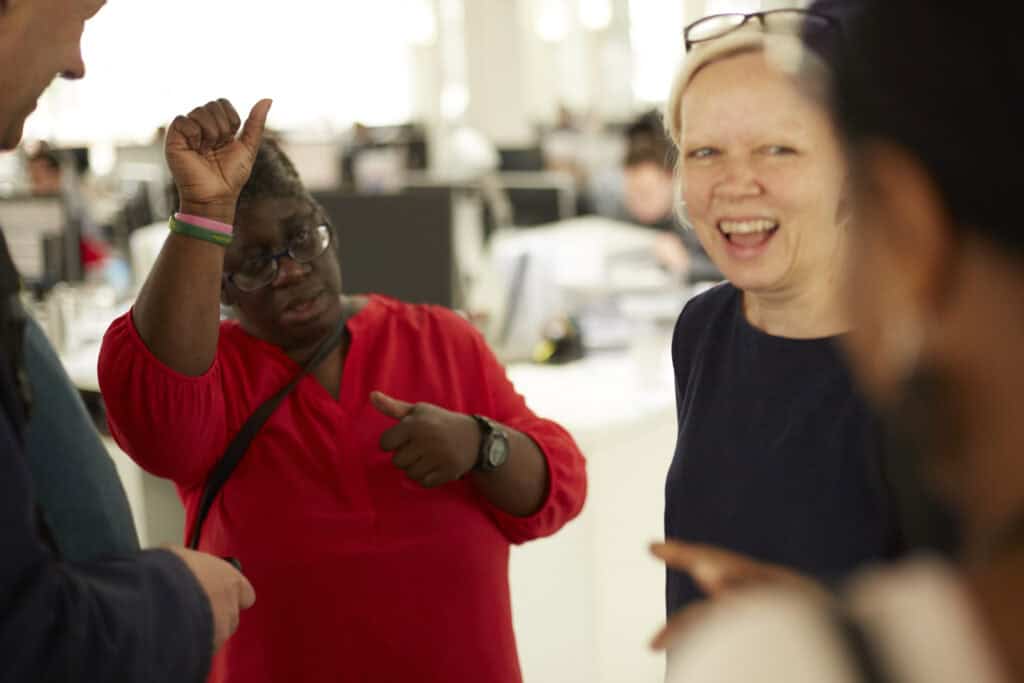
I refer to myself as deafblind. I am totally blind, and I have a hearing impairment. I use cochlear implants to help me hear.
There is so much variation in people who are deafblind, including in the ways we choose to communicate.
At first, communicating with someone who is both deaf and blind may seem daunting. But it doesn’t need to be!
How do deafblind people communicate?
These are some of the main ways that Sense supports people with complex disabilities or who are deafblind to communicate.
Sign language
Sign language uses hand gestures and movement, body language and facial expressions instead of speech. You’ve probably heard of British Sign Language (BSL), which is the most common form of sign language here in the UK.
Makaton
Makaton is a form of communication that uses a combination of signs, symbols and speech.
Deafblind Manual
This is one of the forms of communication I can use. It works by someone spelling words and sentences onto a person’s hand. It’s based on the BSL finger spelling alphabet.
Clear speech
This is my main way of communicating. It basically means that when you speak, everything you say is articulated clearly and simply. Clear speech is helpful for many people with hearing loss, and for many other people too.
Find out more about all the different ways people who are deafblind might communicate.
6 top tips for communicating with a deafblind person
We all like to feel included. The below top tips will give you some ideas on things you can do to make communication easier when you’re interacting with someone who has sensory impairments.
1. Don’t be afraid to ask
One of the most common things people say to me is: “I was worried about getting it wrong”.
I always think the best thing you can do is to ask someone what the best way to communicate with them is and go from there.
There might be mistakes along the way, but that’s okay, and is all part of learning different ways and styles of communication.
2. Make sure you are looking at the person you’re speaking to
Many people who are deafblind will – to a greater or lesser extent – lipread. So it’s important to make sure you are looking at them so they can see your lips when you speak.
3. Say who you are
For me, there’s nothing more frustrating than if someone just starts speaking to me without first saying who they are.
Do introduce yourself, even if we’ve met before – I may not recognise your voice.
4. Be aware of environmental factors
There are several environmental factors that might make communication more challenging. For example, lighting or background noise.
Where possible, make sure that the place you’re in has good lighting, in case the person you’re communicating with needs to be able to see you clearly to communicate.
Background noise is a particular challenge for me, particularly in environments that have things like background music.
5. Speak to me, not my support worker
Sometimes a deafblind person might have a support worker or interpreter with them, but please do speak with the deafblind person rather than their support worker or interpreter.
Find out more about how to communicate with someone using an interpreter.
6. Use clear speech
As mentioned earlier, this is my main way of communicating. It just means speaking clearly.
There might be times when I don’t hear you the first time, but that’s okay, just be prepared to repeat what you said.
Get our emails in your inbox
Join over 87,000 others, and be part of the movement driving change for disabled people.