
How we use music to support children who are deafblind

Three-year-old Arthur is the star of our latest Christmas appeal. He’s deafblind, with limited vision and hearing, but he absolutely loves music and sensory play. Here, his support worker Nicky explains how important music has been for connecting Arthur to the world around him.
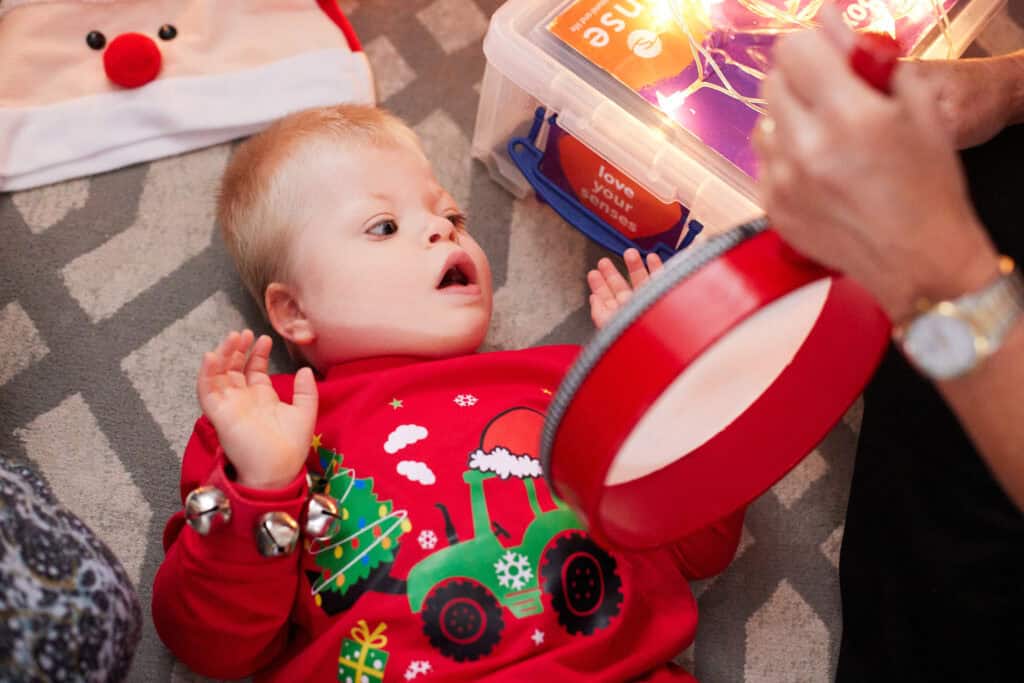
Arthur is a delightful little boy. But when I first met him, it was hard to see much of his character. He was quiet and not very responsive.
It was a very gentle start. We very gradually introduced him to music and activities that helped him come out of his shell.
These days, goodness me, you can see his character! He’s a very cheeky chappy, and he absolutely loves music.
Help a child like Arthur feel the magic of Christmas
Arthur is the star of our 2024 Christmas Appeal. Every child should feel included at this very special time of year. Please give what you can this Christmas.
How we introduce a child who is deafblind to sound and music
In my first sessions with Arthur, I let his mum take the lead, because I believe parents are the experts on their own children.
One of the first things I tried getting Arthur to play with was a handheld chime bar. These are metal tubes that you can hit to make musical notes, like a xylophone.
I started by very gently bringing it to Arthur and letting him feel it. We slowly built up his awareness and confidence – now he reaches out and plays it himself!
I then brought a resonance board for him to try. Resonance boards are boards that children sit or lie on to feel the vibration – or “resonance” – of sounds.
Resonance boards can be great for children with visual and hearing impairments, but not everyone likes them, because the feeling can be intense. It’s really important to introduce them slowly and observe closely the child’s reaction, looking for subtle signs that they are happy or uncomfortable.
But Arthur really likes playing the chime bar on his resonance board. He can hear some sound through his bone-anchored hearing aid, but with the resonance board, he can also feel the vibrations of the sound. He really enjoys feeling that strong feedback.
You can really see when Arthur enjoys something and when he doesn’t. If he doesn’t want to do something, he clams up. But when we put him on the resonance board, he loves it.
Music isn’t just fun – it’s important for learning
Another thing I introduced Arthur to was a sound-activated strobe light. This helped him start to make more sounds as a baby.
At first, I would wait for him to make a sound, then copy it myself, but louder, to activate the light. After a while, he started to get it.
Seeing the impact of a light coming on when he made a sound, helped him to start vocalising more.
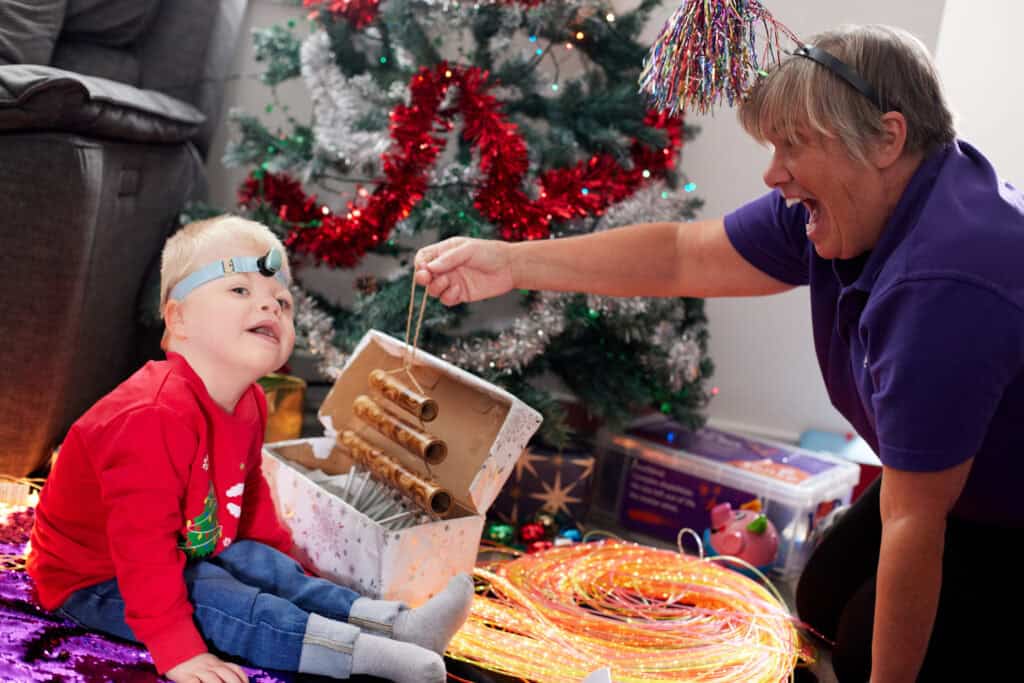
One day, he even blew a raspberry – that was music to my ears! Even a raspberry sound is communication. I joined in, because it’s all about joining the child where they’re at, encouraging them.
Another thing we do is body songs – singing songs about body parts while touching those body parts. Songs give children so much information, because there’s not only the words, but the rhythm, the sound, the feeling. This helps them learn.
Often when I meet families, they’ve been told lots of negative things about their children, and everything they can’t do. The joy of my job is discovering all the things they can do.
Feeling Christmas through music
Music is especially important for children who are deafblind like Arthur at Christmas time. We try to engage children in Christmas through their senses, using smells, bells, fairy lights and everything else.
We support Arthur and other children to play with things like baubles and pine tree branches.
One of the things the children love most of all at Christmas is the sound of wrapping paper. We make sure we get really crinkly, really shiny paper for them to play with.
All the sounds of Christmas, with its carols and jingle bells, are vital for communicating the festive spirit to a child who is deafblind.
And seeing a child like Arthur, who started life being a bit less responsive, lighting up at Christmas time is a delight.
Now, he’s discovering the world, and he’s discovering that it’s a great place.
Help a child like Arthur feel the magic of Christmas
Arthur is the star of our 2024 Christmas Appeal. Every child should feel included at this very special time of year. Please give what you can this Christmas.